Few motorcycle names have the lasting pull of Kawasaki’s Z-Series. From the landmark Z1 of the early 1970s to today’s sharp, muscular naked bikes, the letter Z has come to represent bold engineering, real-world performance and a distinctly Japanese take on the superbike. It is a family with a long history, but also one that still makes sense on British roads today.
This is not a catalogue of every model ever to wear a Z badge. Instead, it is a look at the bikes and ideas that shaped the range: the big-bore original, the middleweights, the experiments, the modern supernakeds and the retro-inspired Z900RS. If the story leaves you wanting one of your own, you can browse our current used Kawasaki motorcycles.
What does the Kawasaki Z-Series stand for?
For Kawasaki, Z has never been just a model code. It has become a shorthand for an upright, road-focused motorcycle with an engine at the centre of the experience. Across five decades the details have changed dramatically: air cooling became liquid cooling, twin shocks gave way to modern rear suspension, carburettors made room for fuel injection and rider aids became more sophisticated. The core idea, though, is familiar. A Z should feel direct, purposeful and involving before it has even left the kerb.
That is why the range has been able to stretch from approachable twin-cylinder machines to litre-class four-cylinder flagships. The styling is often assertive, but the appeal is broader than looks. A good Z combines an engine with character, useful everyday ergonomics and the sort of performance that can make an ordinary ride home feel like an occasion.
The Z1: the motorcycle that changed the conversation
The story begins with the Z1, also known as the 900 Super Four. Revealed in 1972 and sold from 1973, it arrived with a 903cc air-cooled inline-four engine, double overhead camshafts, four exhaust headers and a hydraulic front disc brake. Those ingredients read like a classic superbike recipe now, but at the time they announced a major step forward for a production road motorcycle.
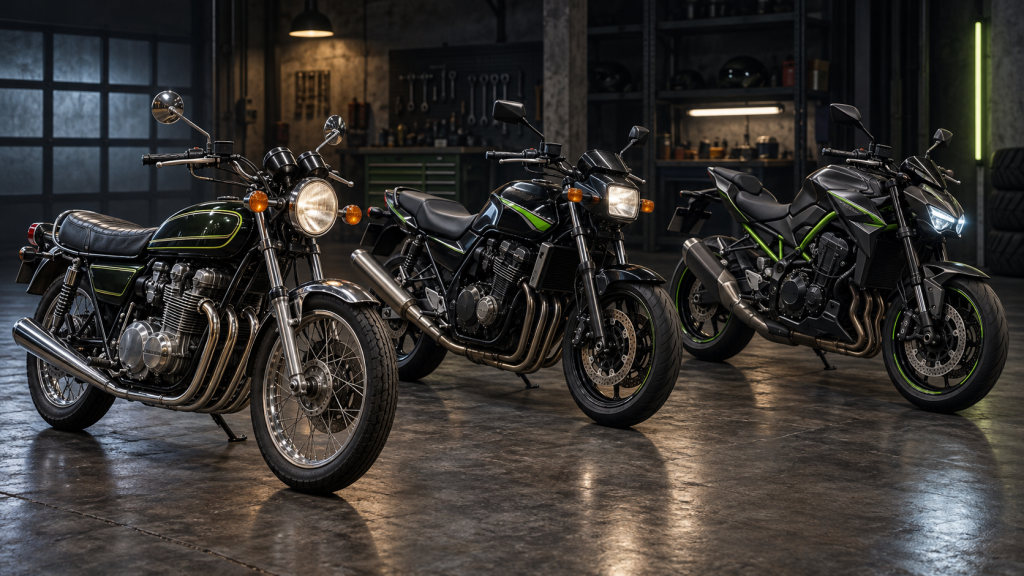
The Z1 was not merely about a large headline figure. It was an ambitious all-round machine: fast, long-legged and sophisticated enough to feel like a serious piece of engineering rather than a one-dimensional straight-line special. Its broad tank, round headlamp, exposed engine and four pipes established a visual language that remains instantly recognisable. Even riders who have never owned one can usually identify the silhouette.
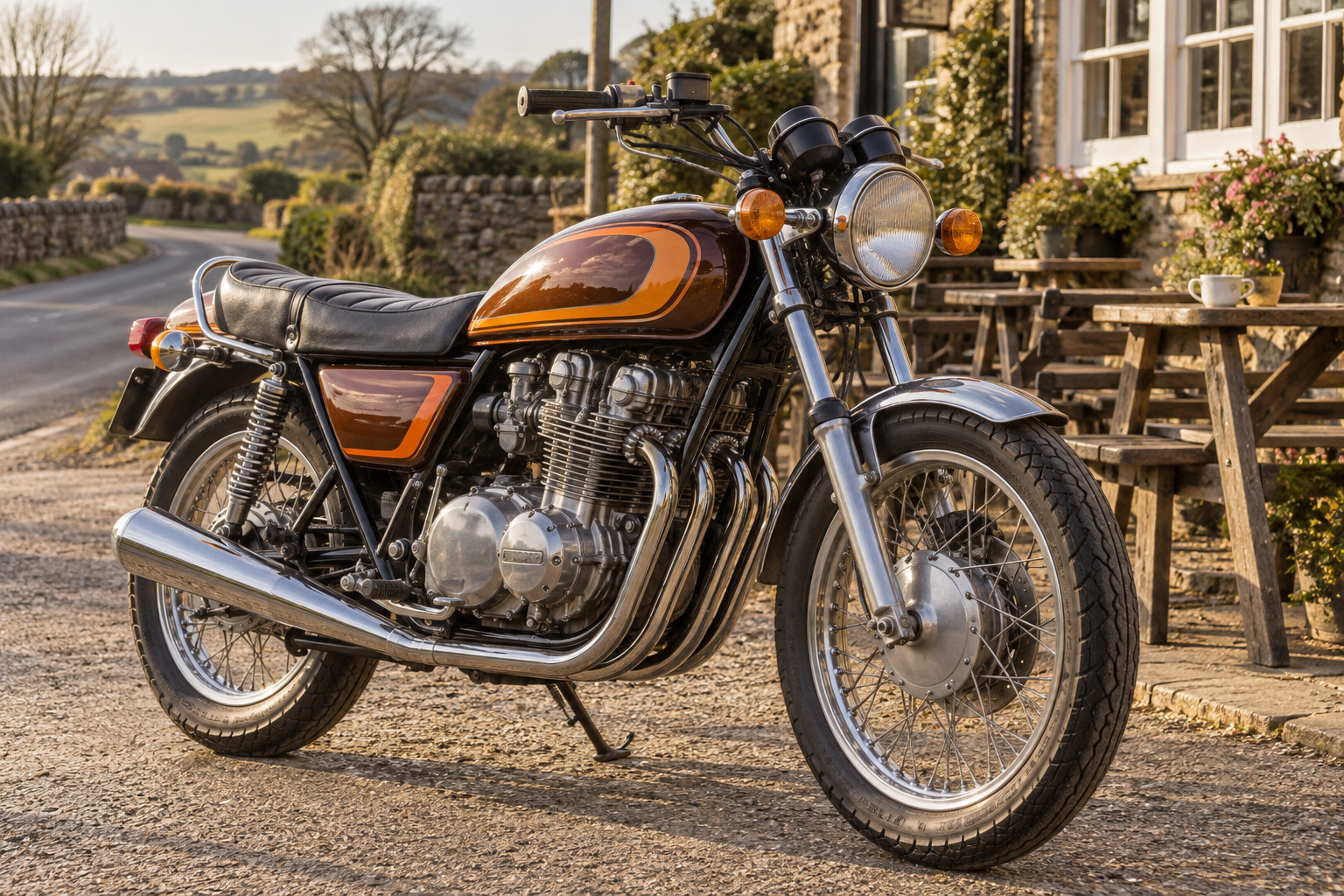
It is easy to romanticise the Z1, and it deserves admiration, but its importance goes beyond nostalgia. It helped establish the big-capacity Japanese four as a genuine performance motorcycle for riders who wanted to tour, commute, explore and occasionally chase a horizon. That versatility is an important part of the Z-Series DNA.
A short Kawasaki Z-Series timeline
1972–73: Z1 / 900 Super Four
The original 903cc Z1 set the tone. Its air-cooled DOHC inline-four and confident road manners made it one of the era’s defining large-capacity motorcycles. It remains the reference point for many later heritage models.
1977: Z650 B1
Kawasaki brought the Z idea to a more compact package with the Z650 B1. It retained the important ingredients – a four-cylinder engine and sporting intent – but in a form that many riders found more manageable on everyday roads. The Z650 name has since returned in modern guise, proving how durable the concept has been.
1978: Z1-R
The Z1-R pushed the original formula towards a more stylised, performance-led look. Its distinctive bodywork, cast wheels, braking package and four-into-one exhaust made it feel deliberately different from a conventional naked roadster. It is a useful reminder that Kawasaki has always been willing to give the Z range some edge.
1979: Z1300
The six-cylinder Z1300 showed how far Kawasaki was prepared to take the letter Z. Water cooling, shaft drive and a huge multi-cylinder engine made it a remarkable technical statement. It was never a lightweight, but that was not the point. The Z1300 demonstrated the company’s appetite for motorcycles that were unapologetically ambitious.
1980: Z1000H
The Z1000H is notable for bringing electronic fuel injection to a Kawasaki street motorcycle. It was another sign that the Z family was not frozen in the past; it was a place for new ideas as well as familiar engine layouts.
Why the Z-Series has endured
Motorcycles change fashion quickly. Fairings come and go, riding positions move towards comfort or commitment, and electronics steadily become part of the conversation. The Z-Series has lasted because it leaves the important mechanical parts visible. There is usually a tank in front of you, an engine beneath you and a broad handlebar giving you leverage over the road. It feels honest.
That simplicity does not mean the bikes are basic. A modern Z can have sophisticated fuelling, high-quality brakes, traction control, selectable power modes and a chassis designed around real grip and real roads. The point is that the rider still feels connected to the motorcycle. The Z character is more about the experience than a single engine size or styling cue.
From air-cooled authority to modern supernaked attitude
By the time the modern naked-bike boom arrived, the expectations had changed. Riders wanted lighter handling, stronger brakes, clean fuelling and an aggressive style without losing the usability of an upright machine. Kawasaki’s later Z models answered with more compact proportions, sharper bodywork and engines designed to deliver a strong mid-range as well as top-end excitement.
The visual change was dramatic. Where the first Z1 looked broad and substantial, modern Z bikes tend to have tightly drawn tanks, minimal bodywork and a forward-leaning stance. Kawasaki calls its approach Sugomi: an impression of contained energy and purpose. You do not need to know the term to understand the effect. A contemporary Z often looks ready to move before the key is turned.
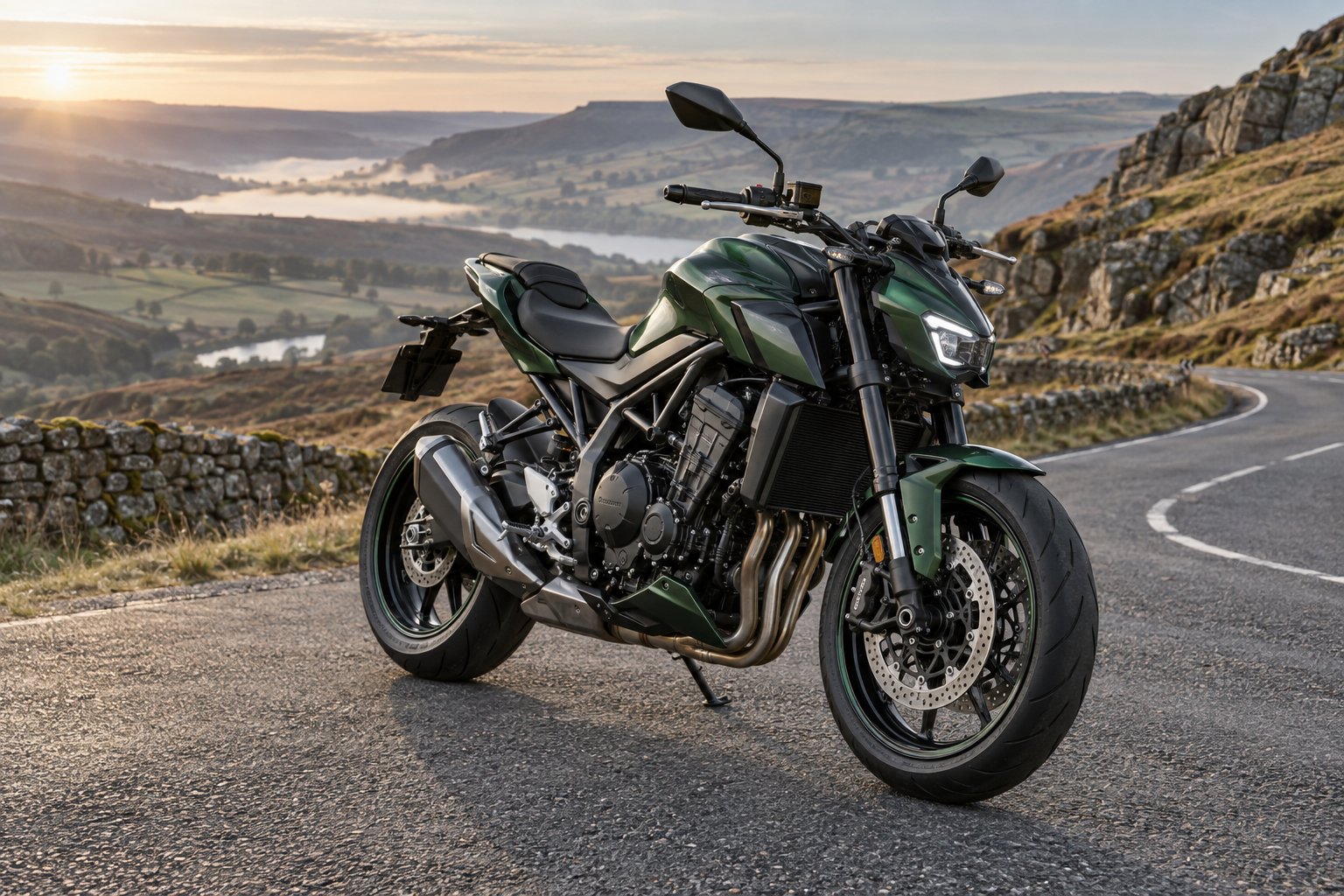
The modern family has made room for different types of rider. A smaller-capacity Z can be a sensible first step into naked-bike ownership, while four-cylinder machines such as the Z900 offer a more intense, rev-hungry experience. Above all, the range gives riders a choice of character rather than simply a choice of power.
If you are comparing used examples, it is worth keeping an eye on the Kawasaki motorcycles currently available at Mallory Motorcycles. Condition, service history, accessories and the type of riding you plan to do matter at least as much as the badge on the tank.
The Z900RS: heritage without the hardship
The Z900RS is perhaps the clearest modern tribute to the original Z1. Its teardrop-style tank, round headlamp and classically proportioned exhaust layout deliberately nod to the early superbike, while the mechanical package belongs to the modern era. That blend is why the RS has connected with riders who appreciate the look of a classic but want dependable starting, modern braking, contemporary tyres and the reassurance of current engineering.
A heritage model can sometimes be too careful, becoming a costume rather than a convincing motorcycle in its own right. The Z900RS avoids that trap because it retains the practical strengths that made the original Z so appealing. It has the upright comfort to cover miles, the engine character to make a Sunday ride interesting and enough polish to feel special when parked outside a café.
Choosing a used Kawasaki Z
There is no single right Z-Series motorcycle. The best choice depends on your experience, budget, physical comfort and the roads you ride most often. Start by thinking about how you will use it rather than chasing a specification sheet.
- For town and everyday use: an approachable, lighter Z can make sense. Look for a comfortable reach to the bars, predictable low-speed fuelling and sensible insurance costs.
- For spirited weekend rides: a four-cylinder Z offers a broader performance window and an unmistakable soundtrack. Check tyres, chain and sprockets, brake condition and the quality of any aftermarket upgrades.
- For long-distance ownership: a heritage-style Z can offer relaxed ergonomics and a more classic appearance. Consider wind protection, luggage options and whether the bike’s seat suits the miles you actually plan to cover.
- For a classic project or collector bike: provenance matters. Matching numbers, correct parts, sensible restoration work and a clear history can be more valuable than a shiny but poorly documented machine.
Whichever generation you choose, buy with your eyes open. A well-maintained used motorcycle should come with evidence of sensible care: service records where available, clean presentation, good consumables and no unexplained warning lights. At Mallory, we are always happy to talk through the type of Kawasaki that may suit your riding.
Frequently asked questions about the Kawasaki Z-Series
Was the Kawasaki Z1 a superbike?
Yes. The Z1 is widely regarded as one of the motorcycles that defined the early superbike era. Its large-capacity DOHC inline-four, performance and sophistication made it a major landmark for Japanese road bikes.
What is the difference between the Kawasaki Z900 and Z900RS?
Both sit in the modern Kawasaki Z family, but their personalities are different. The Z900 leans towards a sharper, more contemporary supernaked look and feel. The Z900RS uses heritage-inspired styling and more traditional proportions, referencing the original Z1 while using modern engineering.
Are classic Kawasaki Z bikes easy to own?
They can be rewarding, but an older motorcycle requires more patience than a modern one. Parts availability, carburettor condition, corrosion, electrical health and the quality of previous work all deserve careful attention. A specialist inspection is sensible if you are new to classic ownership.
Which Kawasaki Z is best for a newer rider?
That depends on licence entitlement and confidence. A lighter, lower-capacity modern Z is usually easier to manage than a large classic four or high-performance naked bike. Sit on a few options and speak to the team about the riding you plan to do before making a decision.
The final word
The Kawasaki Z-Series has survived because it has never relied on one trick. The original Z1 established a benchmark; later bikes explored new engine layouts, fuel injection, middleweight performance and bold styling; the latest machines combine that heritage with the needs of a modern rider. Across all of them, the appeal is the same: a motorcycle that puts the engine, the road and the rider at the heart of the experience.
Whether you are drawn to the shape of a Z1, the drama of a Z1-R, the engineering statement of a Z1300 or the usable performance of a modern Z900 or Z900RS, there is a clear thread running through the family. It is a history worth knowing – and a range that is still very much alive. View our latest used Kawasaki motorcycles to see what is currently in stock.