Listen to this article:
For new riders, mirrors might seem like secondary equipment, just something you glance at to check if a car is behind you. For the experienced motorcyclist, however, the mirrors are a vital, non-negotiable part of the bike’s safety system. In the fast-paced, sometimes unpredictable environment of UK roads, your mirrors are your extended vision, your early warning system, and the key to seamless, defensive riding.
Neglecting your mirror checks isn’t just risky; it severely limits your ability to anticipate trouble and execute maneuvers smoothly. Here’s a detailed breakdown of why your mirrors demand your constant attention.
The Foundation: Situational Awareness & Anticipation

The "OODA Loop" of Riding
Skilled riding involves constant observation, which follows the famous OODA Loop strategy (Observe, Orient, Decide, Act). Your mirrors are essential for the ‘Observe’ phase:
- Tracking Hazards: They allow you to track vehicles approaching quickly from the rear, identify large vehicles entering your space, and monitor the position of vehicles you have just overtaken.
- Anticipating Speed: By watching how quickly a vehicle expands in your mirror, you can accurately gauge its closing speed – a critical skill when preparing to change lanes or brake.
- Maintaining Space: In congested traffic or on the motorway, regular mirror checks ensure you are maintaining a safe buffer zone around yourself, allowing you room to escape trouble if necessary.
Crucial Habit: The best riders execute a quick Mirror-Signal-Manoeuvre routine before every change in speed or direction, but they also check their mirrors every 5-8 seconds, regardless of traffic.
Setting Up for Safety: The Art of the Perfect Angle
Many riders make the mistake of adjusting their mirrors while sitting still in the garage. The real adjustment must be done while seated in your natural riding position – where your body weight is distributed and your elbows are slightly bent.
The "90% Road, 10% You" Rule
Proper mirror adjustment balances the need to see what’s behind you with a small view of your elbow or shoulder for orientation.
- Conventional Mirrors: You should aim to see mostly the lane behind you and either side, with only a tiny sliver of your arm visible on the inner edge. This confirms the mirrors are positioned correctly to your body.
- Bar-End Mirrors: Popular for their sleek look, these often provide a wider view but may sit lower, requiring the rider to look further down. When setting these, ensure you can see the lane directly behind you without excessive neck movement.
The Vision Overlap: Your mirrors should provide coverage that overlaps with your peripheral vision when looking forward. This reduces the size of the crucial (and highly dangerous) blind spot between the two fields of view.
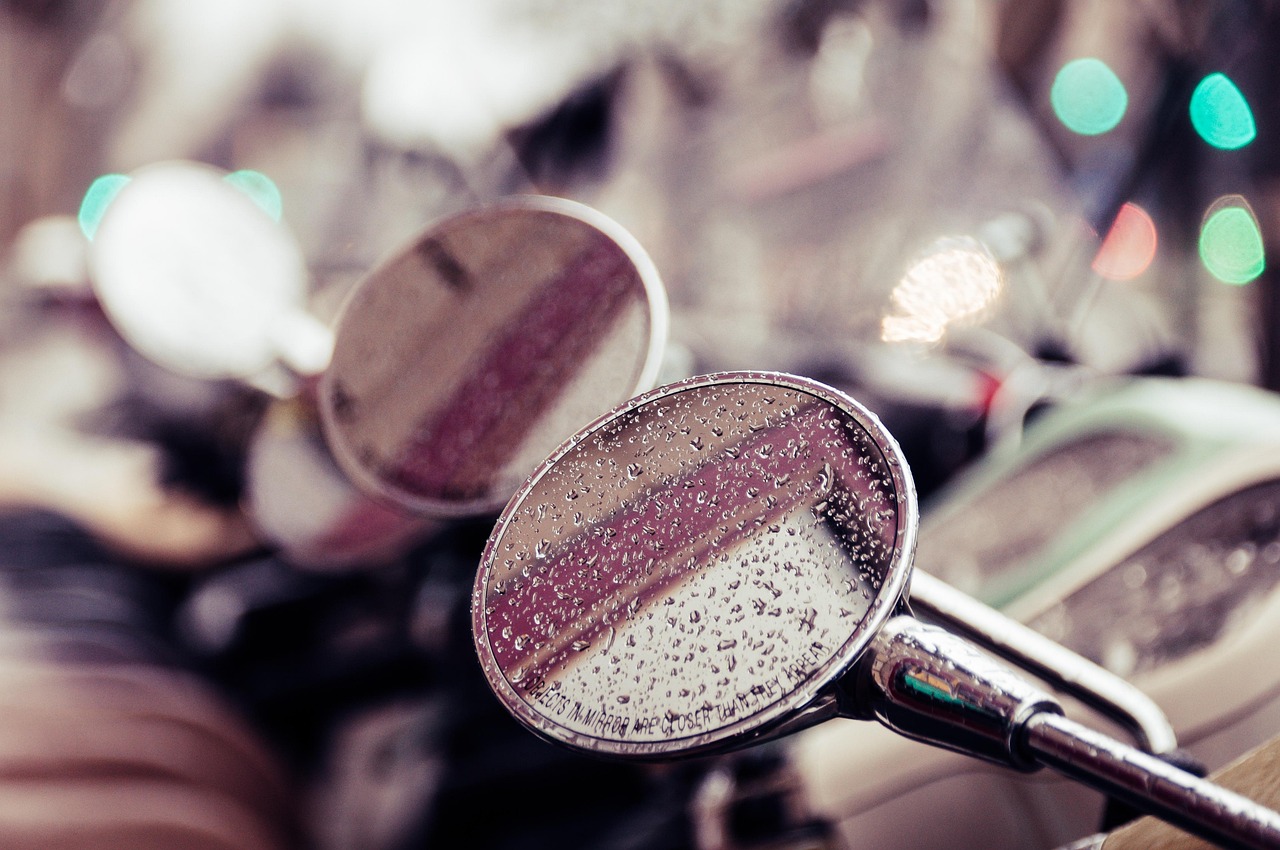
The Myth of "No Blind Spots"
It’s physically impossible for a standard mirror configuration to eliminate the blind spot where a car, particularly a small hatchback or superbike, can hide perfectly. This is why the lifesaver check is so critical.
- The Lifesaver: Just before you commit to any lateral movement – changing lane, pulling out to overtake, or pulling over – a quick glance (the lifesaver check) over the shoulder of the intended direction of travel is mandatory. This confirms the space is clear and eliminates the danger zone the mirrors cannot cover.
- Advanced Warning: Never rely on mirrors alone for the final check. Using your mirrors as a primary monitor and the lifesaver as the final confirmation creates the safest riding process.
Stability & Customisation
Mirrors also affect the bike’s stability, especially at motorway speeds. Cheap, improperly mounted, or overly large mirrors can vibrate excessively, turning the image into a useless blur, or even generate aerodynamic turbulence that affects steering.
- Quality is Key: Investing in quality mirrors or vibration-damping mounts ensures the image remains clear and usable, giving you a true picture of the traffic behind you.
- Aesthetic vs. Function: While customisation is part of motorcycling culture, always prioritise function. Oversized mirrors or very small, highly stylized mirrors can either catch too much wind or fail to provide the necessary field of vision for UK speeds.
By treating your mirrors as the sophisticated safety equipment they are, adjusting them meticulously, and integrating their checks seamlessly into your riding routine, you ensure you are always one step ahead, making every journey smoother, safer, and infinitely more enjoyable.