Getting your motorcycle licence in the UK takes a bit of planning — but once you understand the system, it’s a straightforward process. Whether you’re a complete beginner who’s never sat on a bike, or you’ve been riding on a CBT for years and want to go the whole way, this guide covers everything you need to know in 2026.
We’ll walk you through every stage: the categories, the tests, the costs, the timelines, and what to expect at each step — so you can get licensed, get legal, and get riding.
UK Motorcycle Licence Categories Explained
Category AM — Moped Licence
Category A1 — Light Motorcycle Licence
The A1 category is for light motorcycles up to 125cc with a power output no greater than 11kW
(approximately 15bhp) and a power-to-weight ratio no more than 0.1kW/kg. You must be at least
17 years old. A1 also covers mopeds, so once you hold an A1 licence you can ride anything in
the AM category too.
Category A2 — Medium Motorcycle Licence
Category A — Full Motorcycle Licence
Step 1: Get a Provisional Motorcycle Licence
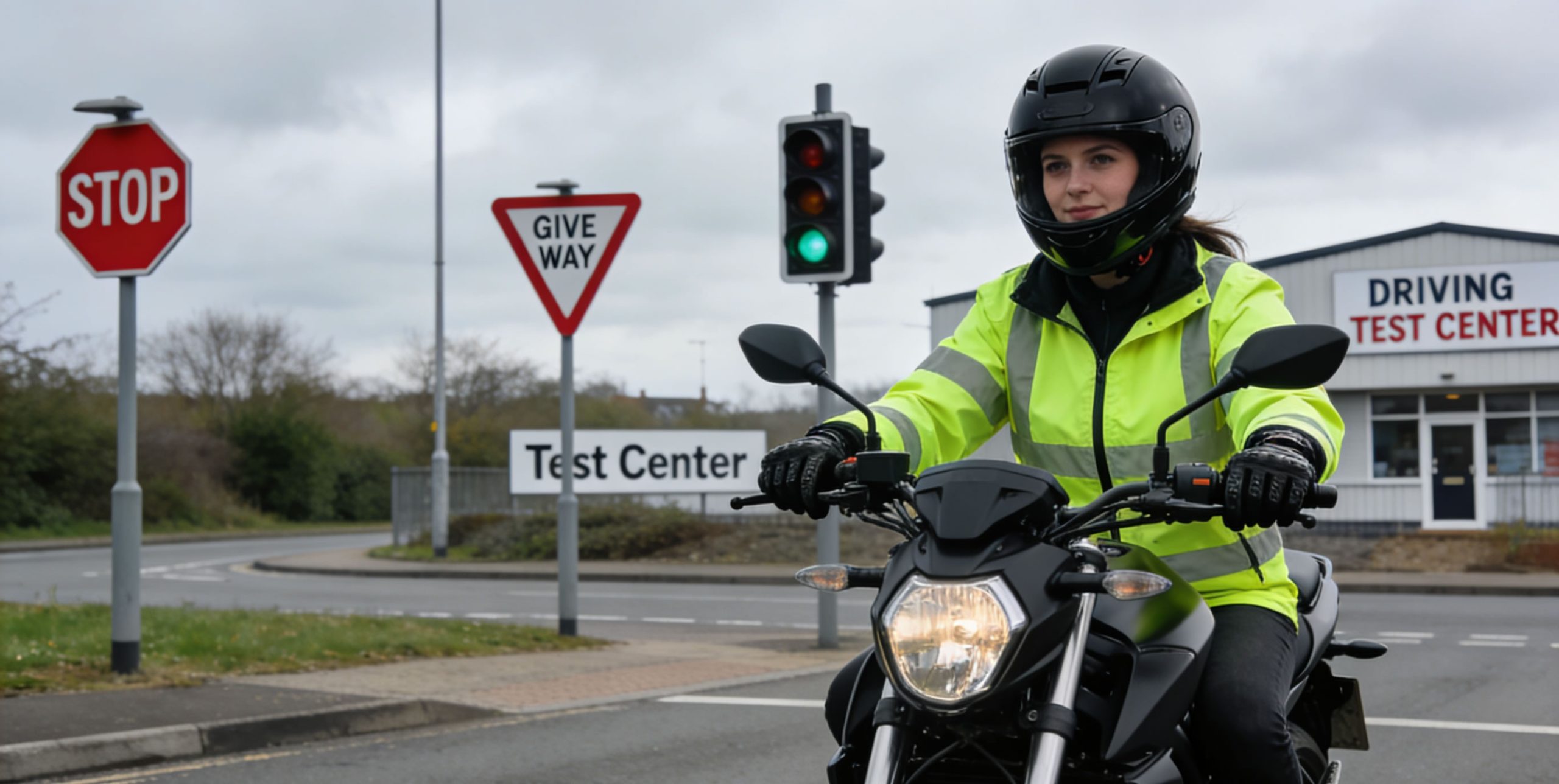
If you don’t already hold a driving licence of any kind, you’ll need to apply for a provisional
licence via the DVLA. You can do this online at GOV.UK or by completing a D1 application form
available at most Post Offices.
Provisional Licence Requirements
- You must be at least 15 years and 9 months old to apply (so it arrives in time for your 16th birthday if you’re going for a moped)
- You’ll need your National Insurance number and UK passport (or another form of identity)
- There is a fee of £34 to apply online (correct as of 2026 — check GOV.UK for the latest figure)
- You must meet the minimum eyesight standard: being able to read a standard number plate from 20 metres
Once your provisional arrives, you’re legally entitled to start riding — but only after
completing your CBT.
Step 2: Complete Your CBT (Compulsory Basic Training)
CBT — Compulsory Basic Training — is not a test in the traditional sense. You can’t fail it outright, but you do have to demonstrate a satisfactory level of competence before your instructor will sign you off. If you can’t demonstrate the required skills on the day, you’ll need to come back and complete the training again.
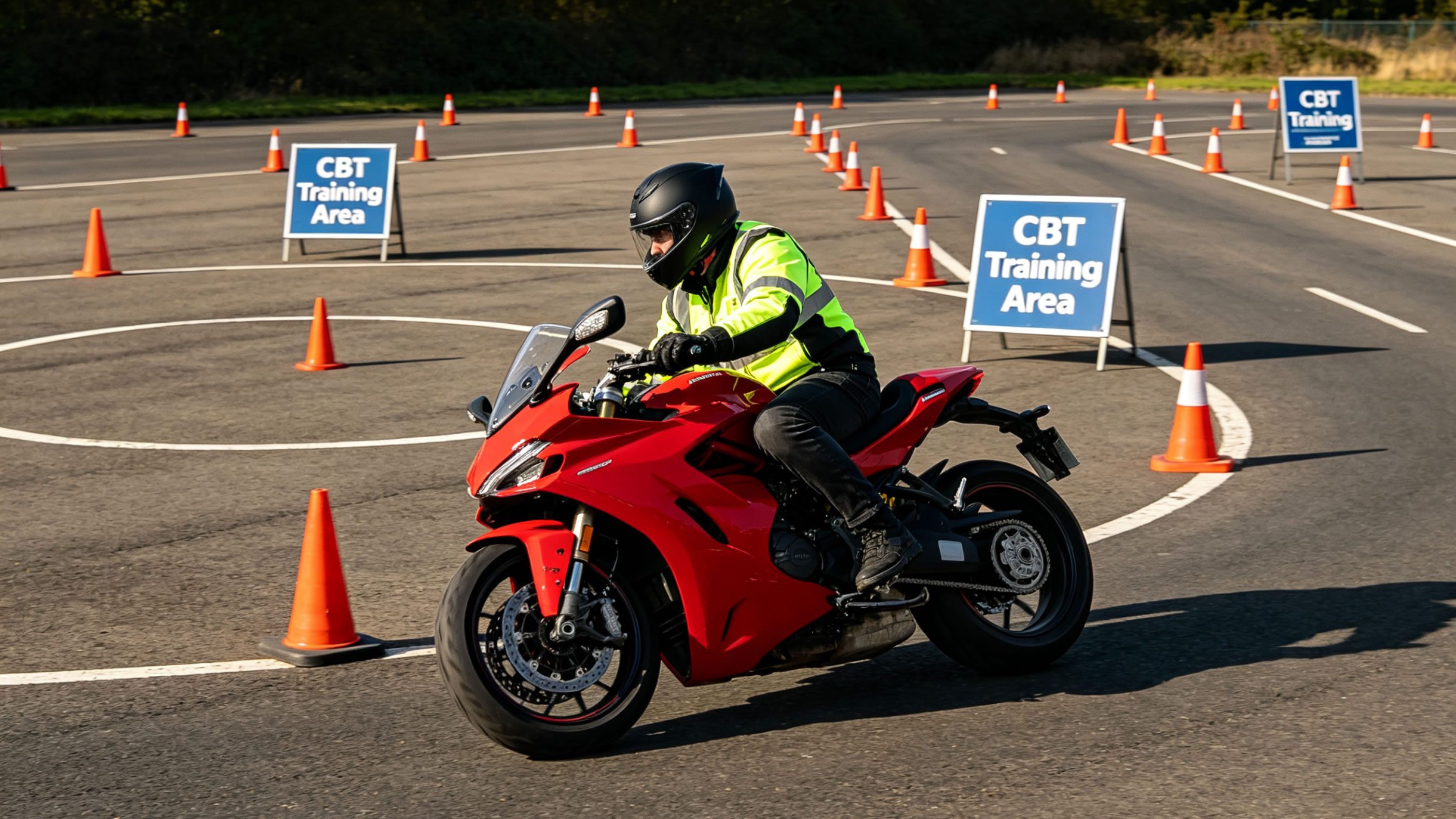
CBT is a mandatory one-day training course. It must be completed at a DVSA-approved motorcycle
training centre (also called an ATB — Approved Training Body). The certificate you receive,
known as a DL196, is valid for two years.
What Does CBT Training Cover?
CBT is structured into five distinct elements:
- Element A — Introduction: Eyesight check, overview of the training, explanation of legal requirements, and basic motorcycle safety checks (the T-CLOCS or equivalent pre-ride inspection).
- Element B — Practical on-site training: Learning to handle the motorcycle safely — pushing, balancing, and positioning the bike. No riding yet.
- Element C — Practical on-site riding: Moving off, changing gear, braking, and steering — all carried out on a private off-road area or training yard.
- Element D — Practical on-road training: Your instructor will accompany you as a passenger or follow you on another bike, with communication via intercom, as you ride on real roads for the first time.
- Element E — Practical on-road riding: Riding on a variety of roads, demonstrating that you can handle the bike safely and responsibly in real traffic conditions.
What Bike Do You Ride on CBT?
On CBT, you’ll ride a bike provided by the training school — typically a 125cc motorcycle or moped. You do not need your own bike to complete CBT. Most schools provide helmets too, although you’ll want your own gear if you plan to ride afterwards.
How Much Does CBT Cost?
CBT typically costs between £130 and £200, depending on your location and the training school. Prices in London and the South East tend to be higher than in the Midlands and North.
What Are the CBT Riding Restrictions?
Once you hold a valid CBT certificate, you can ride a motorcycle or moped on public roads, but with the following restrictions:
- You must display L plates (or D plates in Wales) at all times
- You cannot carry a pillion passenger
- You cannot ride on motorways
- You are limited to motorcycles up to 125cc and 11kW (unless under 17, where moped rules apply)
These restrictions remain in place until you pass your full motorcycle tests. Your CBT certificate lasts for two years — after which you must either retake CBT or have already progressed to your full licence.
Step 3: Pass Your Motorcycle Theory Test
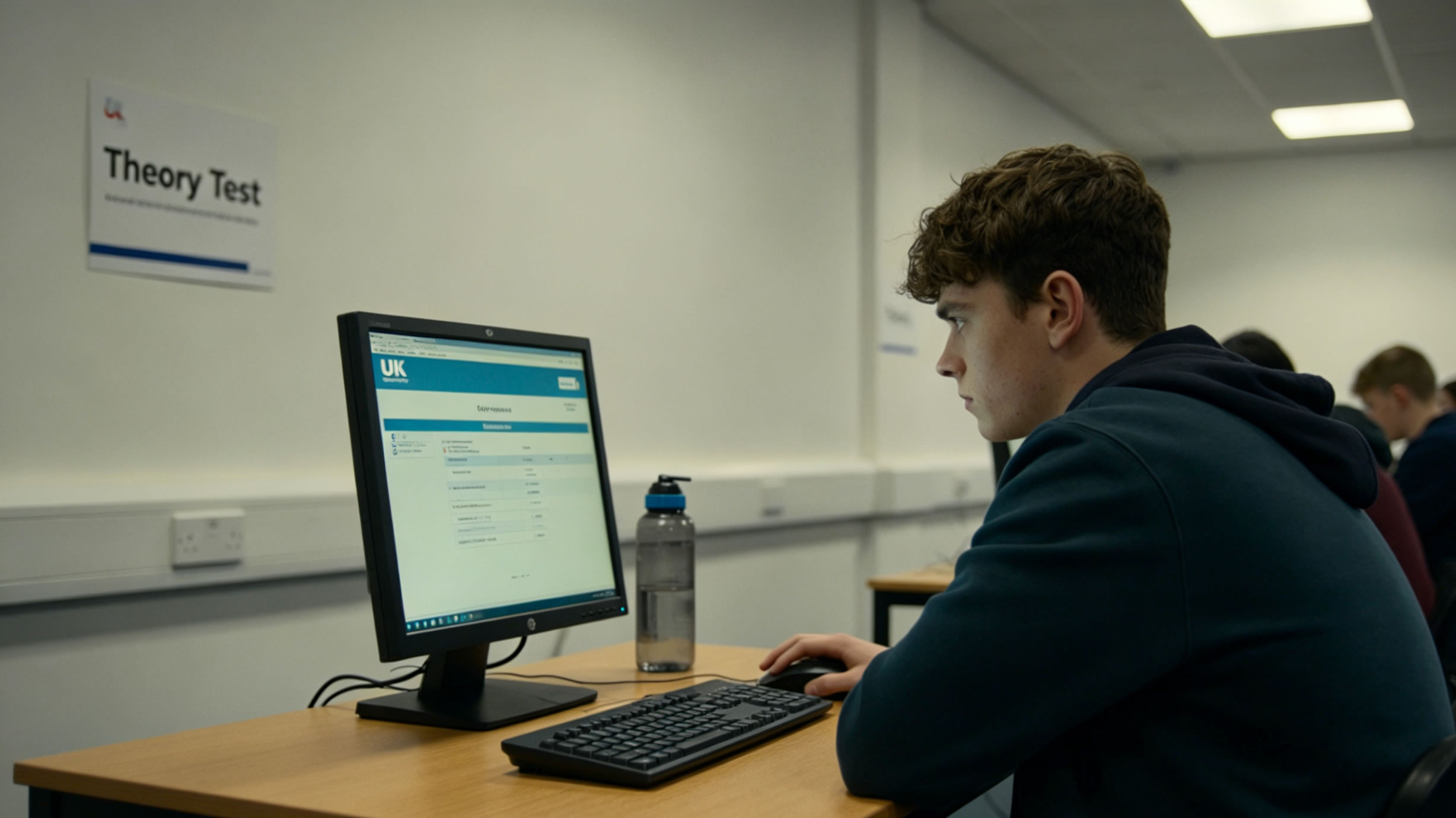
The motorcycle theory test must be passed before you can book either Module 1 or Module 2. If you already hold a full car licence, you still need to pass the motorcycle theory test separately — there is no exemption.
What Is in the Motorcycle Theory Test?
Part 1: Multiple Choice Questions
You’ll be presented with 50 multiple choice questions drawn from the DVSA question bank, covering topics including:
- Road signs and markings
- The Highway Code
- Hazard awareness and anticipation
- Motorcycle safety and maintenance
- Rules of the road for motorcyclists
- Motorway riding and adverse weather conditions
You need to score at least 43 out of 50 to pass. You have 57 minutes to answer all 50 questions.
Part 2: Hazard Perception
The hazard perception section shows you 14 video clips of real driving and riding scenarios. Within these clips there are 15 hazards in total (one clip contains two developing hazards). You score points by clicking when you spot a hazard — the earlier you identify a developing hazard, the higher your score. The maximum score is 75. You need 44 out of 75 to pass.
How to Book the Theory Test
Book your theory test online at GOV.UK or by phone through the DVSA booking service. The fee is currently £23 for the theory test. Tests are taken at official DVSA theory test centres across the UK — there are hundreds of locations nationally, including several in and around Derby, Nottingham, and Leicester.
How to Prepare for the Theory Test
The official DVSA study materials are the best starting point. The DVSA’s own app — Theory Test Pro — is widely used and closely mirrors the real test. Use the official Highway Code and the DVSA’s motorcycle-specific guidance alongside it. Most people who study seriously pass within a few weeks of preparation.
Step 4: Pass Your Module 1 Test (Off-Road Manoeuvres)
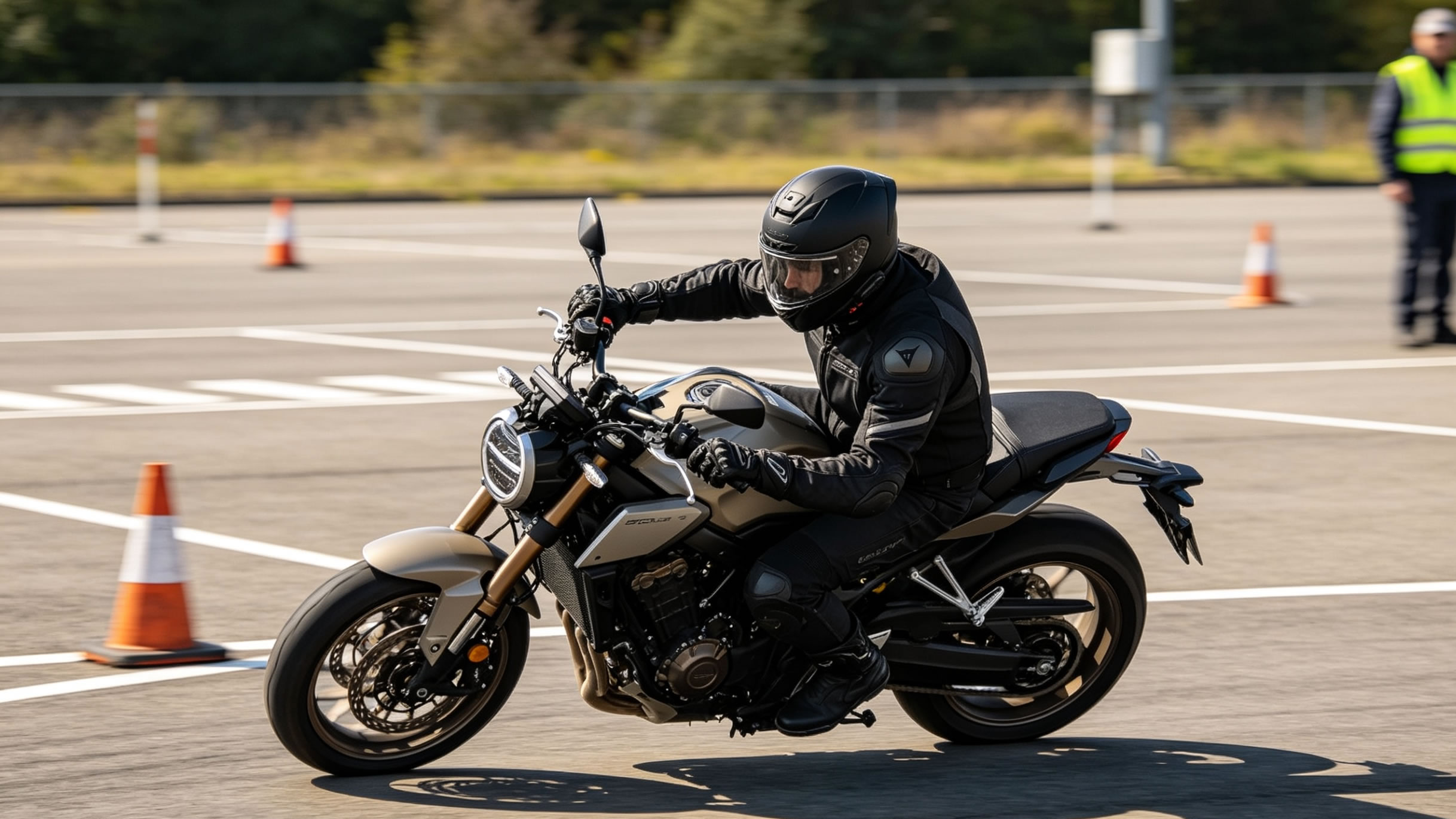
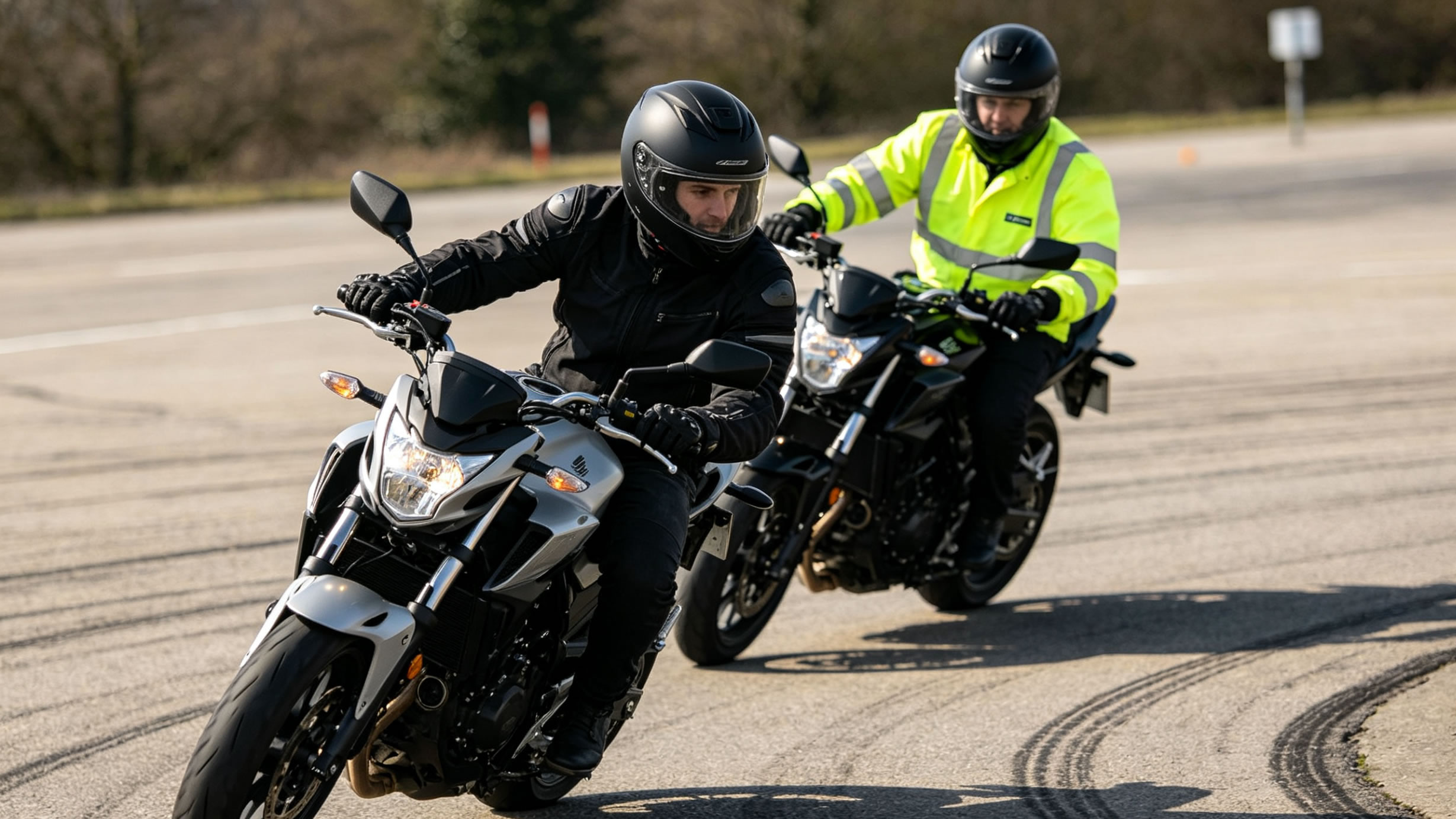
Module 1 is the off-road component of your practical motorcycle test. It takes place entirely within a private test area — you won’t be on public roads at all during this stage. The test is conducted by a DVSA examiner at a motorcycle test centre.
What Does the Module 1 Test Include?
You’ll be asked to carry out a series of manoeuvres, demonstrating control of the motorcycle at slow speed and in more dynamic situations. The exercises include:
- Wheeling the bike: Walking the motorcycle into a designated bay, demonstrating you can handle its weight without the engine running.
- Slow ride: Riding at walking pace in a straight line, demonstrating balance and control.
- U-turn: Performing a controlled U-turn within a marked area.
- Figure of eight: Riding a controlled figure-of-eight pattern at low speed.
- Slalom: Weaving through a series of cones.
- Emergency stop: Accelerating to a minimum of 32mph and performing a controlled emergency stop when prompted by the examiner.
- Hazard avoidance: Accelerating to at least 32mph then swerving around a simulated hazard before coming to a controlled stop.
- Cornering (bend riding): Demonstrating correct positioning, speed, and control through a marked bend.
Module 1 Pass Mark & Faults
You are allowed up to five minor (riding) faults during the Module 1 test. A single serious or dangerous fault means an immediate fail. The test takes approximately 20 minutes in total.
What Bike Do You Use for Module 1?
For Module 1 (and Module 2), you must use a motorcycle that meets the requirements of the category you’re testing for. Most candidates use a training school bike on test day, which means the bike is already approved for the relevant category. If you’re using your own bike, make sure it’s properly insured for test use and meets the DVSA’s requirements.
How to Book Module 1
Module 1 must be booked through GOV.UK or the DVSA booking line. The fee is currently £15.50 for a weekday test. Demand for test slots can be high, particularly in spring and summer — book as early as possible.
Step 5: Pass Your Module 2 Test (On-Road Riding)
Module 2 is your on-road test. This is the stage most people associate with a practical driving or riding test — you’ll ride on real public roads while a DVSA examiner follows behind in a car, communicating instructions to you via radio earpiece.
You must have passed Module 1 before you can take Module 2. Module 2 must also be taken at a DVSA-approved test centre.
What Does the Module 2 Test Involve?
Pre-Ride Safety Questions
Before you set off, the examiner will ask you two safety-related questions: one ‘tell me’ question (a verbal answer) and one ‘show me’ question (a physical demonstration on the bike). These cover basic motorcycle safety checks such as tyre pressure, oil levels, braking systems, lights, and the throttle. You won’t fail the test for getting a safety question wrong — it counts as a minor fault — but it’s worth knowing your answers.
The On-Road Ride
The riding portion of Module 2 lasts approximately 40 minutes. You’ll be directed around a pre-set route that takes in a variety of road types and conditions, including:
- Town centre and built-up areas
- Rural roads and A-roads
- Dual carriageways (motorway riding is not included in the test, but dual carriageway experience is required)
- Roundabouts, junctions, and traffic lights
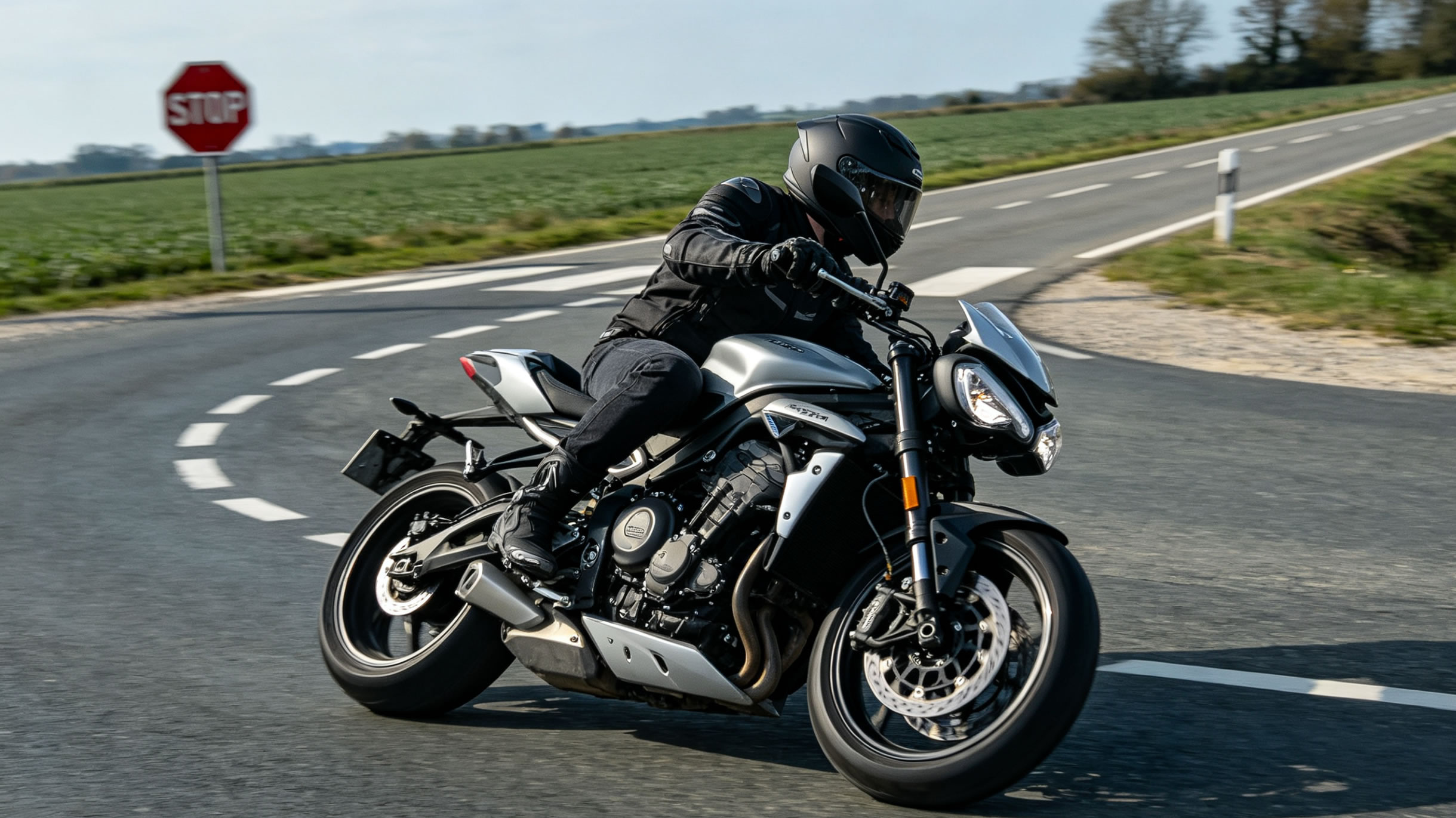
At some point during the test you’ll also be asked to pull over and carry out an independent riding exercise — following road signs or a sat-nav route for approximately 10 minutes without turn-by-turn instruction from the examiner. This is designed to test your ability to plan your own route safely and confidently.
Module 2 Pass Mark & Faults
To pass Module 2, you must accumulate no more than 10 minor (riding) faults, and receive zero serious or dangerous faults. A serious fault is one that could have been potentially dangerous. A dangerous fault is one that put you, the examiner, or other road users in actual danger — this results in an immediate fail.
How Much Does Module 2 Cost?
The Module 2 test fee is currently £75 for a weekday test. Evening and weekend tests are slightly more expensive. Check GOV.UK for current pricing before booking.
Once you pass Module 2, you have passed your full practical motorcycle test. Your licence category will be updated by the DVLA and you can ride within the category you tested for, without L plates, on all roads including motorways.
The Direct Access Scheme (DAS): Getting Straight to a Full A Licence
If you’re 24 or over, you can bypass the A1 and A2 categories entirely and go straight for the full, unrestricted Category A licence through what’s known as the Direct Access Scheme, or DAS.
DAS is also available to riders aged 21 or over who have already held an A2 licence for at least two years — this is known as Progressive Access (covered in the next section).
How Does the Direct Access Scheme Work?
DAS follows the same structure as the standard route: CBT (if you don’t already hold one or haven’t held a previous full motorcycle licence), theory test, Module 1, and Module 2. The key differences are:
- The motorcycle used must be at least 595cc and produce at least 40kW (54bhp) — it must be a genuinely unrestricted, full-power machine
- All training and testing must be carried out on a bike that meets these specifications
- You must train with a DVSA-approved DAS instructor
Most training schools offer dedicated DAS packages that include the training days, use of a suitable bike, and guided preparation for both Module 1 and Module 2.
Why Choose DAS?
If you’re old enough to qualify and serious about riding long-term, DAS is often the most cost-effective route. You spend money once on training and tests, and you come away with a full, unrestricted licence — no revisiting the process in two years to upgrade from A2. For riders who already know what they want — an 850cc naked, a touring twin, a full-litre sportsbike — DAS makes obvious sense.
Progressive Access: Moving from A2 to a Full A Licence
If you obtained your A2 licence before you turned 24, you don’t have to wait until you’re 24 to get unrestricted. Through Progressive Access, you can upgrade to a full Category A licence at age 21 — as long as you’ve held your A2 for at least two years.
For example: if you pass your A2 test at 19, you can take the Category A tests at 21. If you pass your A2 at 20, you can take the Category A tests at 22. The two-year minimum holding period always applies, regardless of your age at the point of upgrading.
What Tests Are Required for Progressive Access?
You still need to pass Module 1 and Module 2 for the Category A. You do not need to retake your theory test if it is still valid (theory test passes are valid for two years). However, many riders in this position will find their theory test has expired and will need to resit it.
The motorcycle used must meet Category A specifications — at least 595cc and at least 40kW. As with DAS, most training schools can supply a suitable test machine.
How Much Does It Cost to Get a Motorcycle Licence in the UK?
Getting a full motorcycle licence in the UK involves a series of fees across multiple stages. Here’s a breakdown of the main costs involved (figures correct as of 2026 — check GOV.UK and your training school for the latest figures):
Official DVSA & DVLA Fees
- Provisional licence: £34 (online application)
- Theory test: £23
- Module 1 test: £15.50 (weekday)
- Module 2 test: £75 (weekday)
Training School Fees
- CBT: £130 to £200 (typical UK range)
- Module 1 training (half day to full day): £100 to £200
- Module 2 training (typically 1 to 2 days): £200 to £350
- Full DAS package (training + test prep): £500 to £900 depending on provider and location
Typical Total Cost Estimate
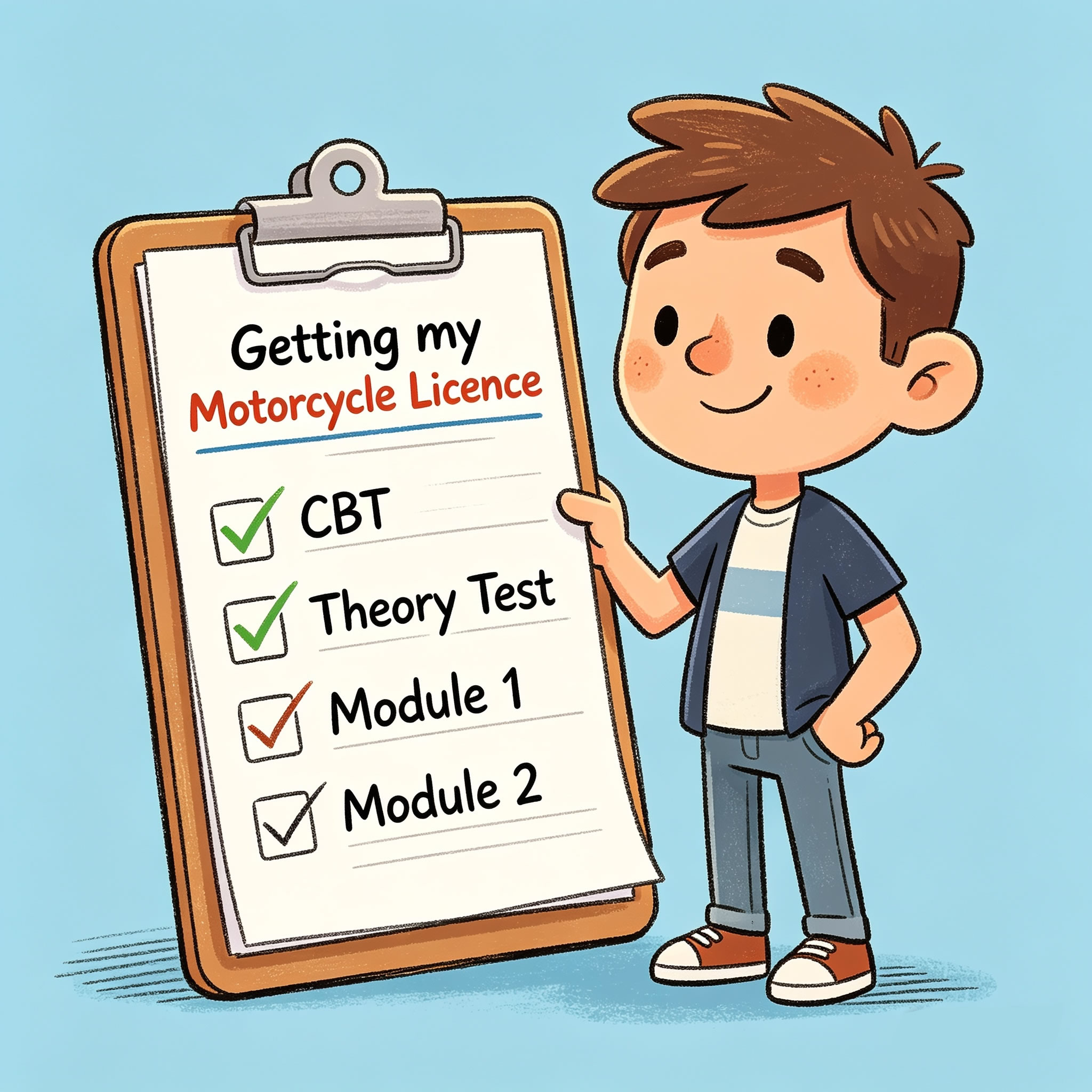
For a rider going through the full process — CBT, theory, Module 1, and Module 2 — expect to budget between £600 and £1,100 in total, including training and test fees. This assumes first-time passes at each stage. Resits add to the cost, so proper preparation is worth the investment.
Buying or hiring your own gear is an additional consideration. A helmet, jacket, gloves, and boots are all required — not just for safety, but because you won’t be allowed to test without appropriate protective clothing.
How Long Does It Take to Get Your Motorcycle Licence?
The honest answer: it depends on how quickly you can book tests and how often you can train. Here’s a realistic timeline for most riders working through the process in 2026:
Provisional Licence
Allow up to one week for an online DVLA application to be processed, or up to three weeks if applying by post.
CBT
Theory Test
Theory test slots are generally available within one to three weeks. Allow two to four weeks of study time beforehand if you haven’t studied previously.
Module 1
DVSA Module 1 test slots vary by region but can be booked within one to four weeks in most areas. Training for Module 1 typically takes half a day to a full day.
Module 2
Module 2 slots are in higher demand and waiting times can be two to six weeks, particularly in spring and summer. Budget one to two days of on-road training before your test.
Total Realistic Timeline
Most riders who start from scratch and work through the process steadily — rather than rushing or letting gaps open up between stages — complete everything within two to four months. If test slots are scarce in your area or you can only train at weekends, allow slightly longer.
Riding Legally While You Learn
Once you’ve completed your CBT, you’re entitled to ride a motorcycle on public roads while you work towards your full licence. Here’s what that looks like in practice:
What You Can Ride on a CBT Certificate
On a valid CBT certificate, you can ride:
- A moped (50cc or equivalent, maximum 28mph) if you’re 16 or over
- A motorcycle up to 125cc and 11kW if you’re 17 or over
Restrictions You Must Observe
- L plates must be displayed front and rear at all times
- No carrying a pillion passenger
- No riding on motorways
- The bike must be correctly taxed, insured, and have a valid MOT if applicable
Insurance While on a CBT
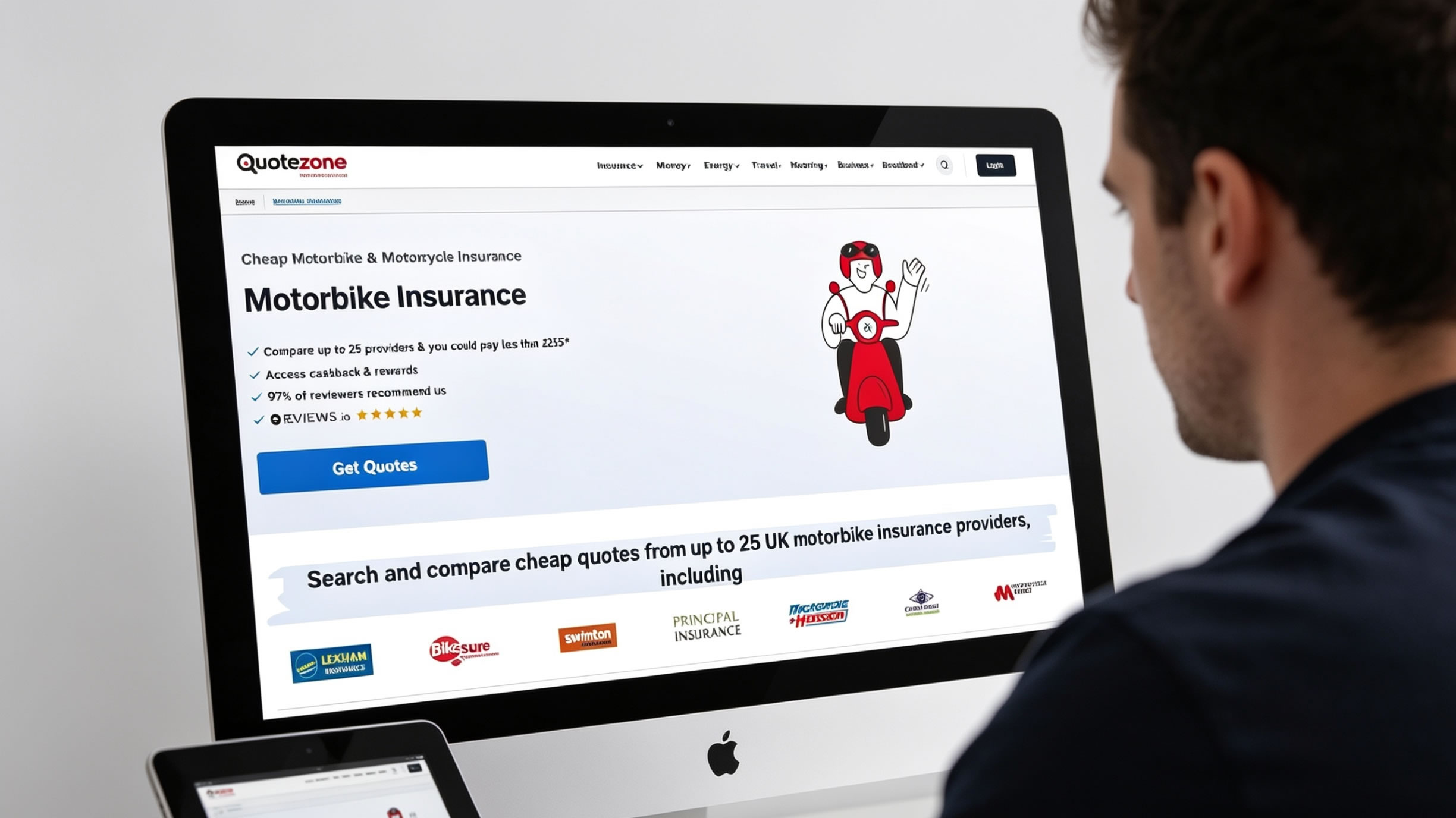
You must have at minimum third-party motorcycle insurance in place before riding on public roads — even on a learner plate. This applies from day one. Your insurance must reflect your learner status. Riding without insurance is illegal and carries serious penalties including a fixed penalty notice, licence endorsement, and potential disqualification.
After You Pass: What Happens Next?
Passing Module 2 is a brilliant moment, congratulations! Here’s what happens next:
Your Test Pass Certificate
At the end of a successful Module 2 test, your examiner will issue you with a pass certificate. This acts as proof of your pass while you wait for your updated licence to arrive from the DVLA.
Updating Your Driving Licence
The DVSA will notify the DVLA of your pass. Your driving licence should be automatically updated to show your new motorcycle category. If it isn’t updated within a few weeks, contact the DVLA directly. You can ride under your pass certificate in the meantime.
Removing L Plates
The moment you pass Module 2 and hold your full licence, off come the L plates. You’re now free to carry a pillion passenger (as long as they have suitable footpegs and a helmet), ride on motorways, and ride any motorcycle that falls within your licence category.
Considering Further Training
Many new licence holders choose to take further advanced rider training — courses such as BikeSafe (run by UK police forces), the Institute of Advanced Motorists (IAM RoadSmart) or the RoSPA Advanced Motorcyclists qualification. Advanced training can meaningfully improve your safety on the road and can sometimes reduce your insurance premium. It’s worth looking into, especially if you plan to ride regularly or on fast rural roads.
Shopping for Your Next Bike
Now comes the best part. If you’re newly licensed on an A2, you’re looking for bikes restricted to 35kW — a category that includes some genuinely exciting machinery across naked, sports, adventure, and touring styles. If you’ve gone all the way to a full A licence, the door is entirely open.

Whether you’re looking for a first bike, a second bike, or an upgrade, our used motorcycle stock at Mallory Motorcycles covers a wide range of makes, models, and licence categories — with bikes suited to newly licensed A2 riders right through to experienced full-licence riders. Browse our current stock here.
Frequently Asked Questions
Can I ride a 125cc without a CBT?
No. To ride any motorcycle on public roads in the UK, including a 125cc, you must have completed CBT and hold a valid provisional licence. Riding without a CBT is illegal.
Does a car driving licence let me ride a motorcycle?
Holding a full car (Category B) licence does not automatically entitle you to ride a motorcycle. You still need to complete CBT, pass the motorcycle theory test, and pass Module 1 and Module 2 for the appropriate motorcycle licence category.
How long is a CBT certificate valid for?
A CBT certificate (DL196) is valid for two years from the date of issue. If you haven’t obtained your full licence within two years, you must complete CBT again to continue riding legally.
Can I take Module 1 and Module 2 on the same day?
In theory, yes — there’s no rule preventing you from booking them on the same day if slots are available. However, most riders and training schools advise against it. Module 1 can be stressful, and going into a 40-minute on-road test immediately afterwards is a lot to handle. Taking them on separate days gives you time to decompress and prepare properly.
What happens if I fail Module 1 or Module 2
A fail at either Module 1 or Module 2 means you’ll need to rebook the test. There’s no mandatory waiting period — you can rebook as soon as a slot is available. Take some time to debrief with your instructor, address whatever caused the fail, and come back prepared. Most riders who fail do so due to nerves or a single lapse, not a fundamental lack of skill.
Can I ride on motorways with a full motorcycle licence?
Yes. Once you hold a full motorcycle licence (having passed Module 2), you are entitled to ride on motorways. You cannot ride on motorways on a CBT certificate alone.
What is the minimum age to get a full motorcycle licence in the UK?
The minimum age depends on the category. You can obtain a full A1 licence at 17, a full A2 licence at 19, and a full Category A (unrestricted) licence at 21 via Progressive Access (if you’ve held A2 for two years) or at 24 via Direct Access.
Do I need my own bike to take my test?
No. Most DVSA motorcycle tests are taken on training school bikes. This is the most common approach and ensures the bike meets all the DVSA’s specifications for the relevant category. If you wish to test on your own bike, it must meet the DVSA’s requirements and be properly insured for test use.
Can I get a motorcycle licence if I have a medical condition?
It depends on the condition. Certain medical conditions must be declared to the DVLA and may affect your eligibility to hold a motorcycle licence. The DVLA publishes detailed guidance on medical standards for drivers and riders — visit GOV.UK and search for ‘medical conditions, disabilities and driving’ for the full list.